


红字
China accelerates LEO satellite deployment with two launches in 12 days, but gap remains in launchpad efficiency, rocket reusability: expert_我的网站

一 | 老後の家計は「年金がいくらあるか」だけで決まるものではありません。

二 |
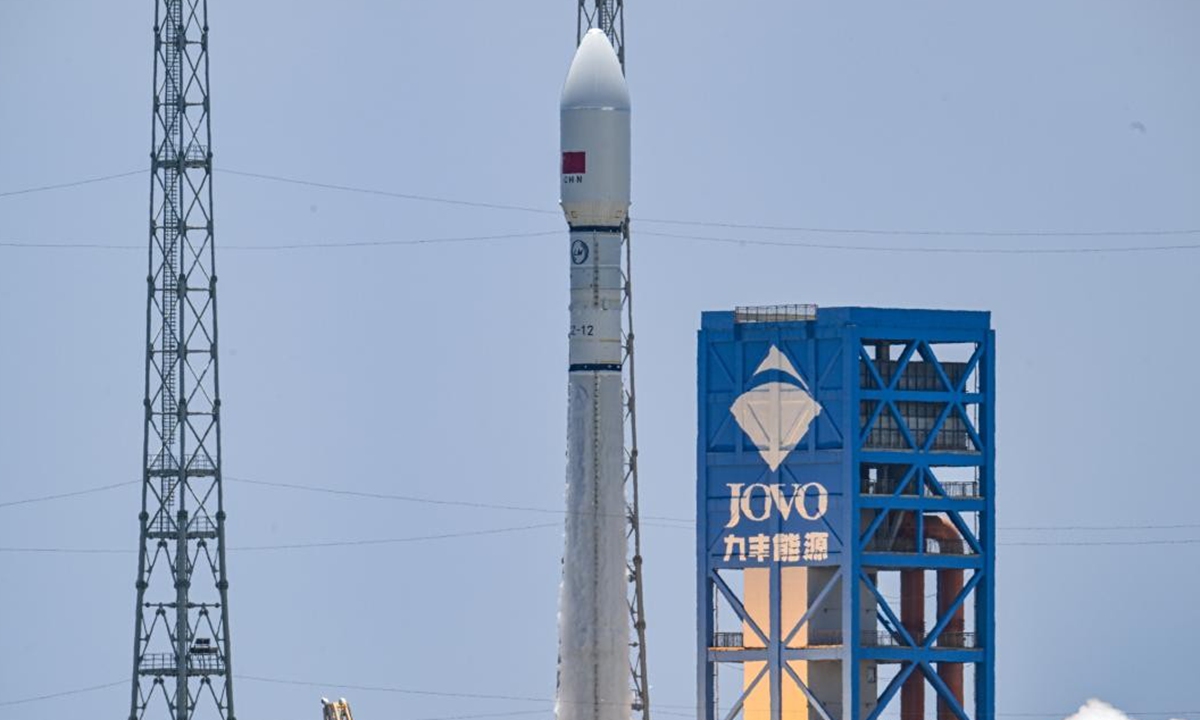
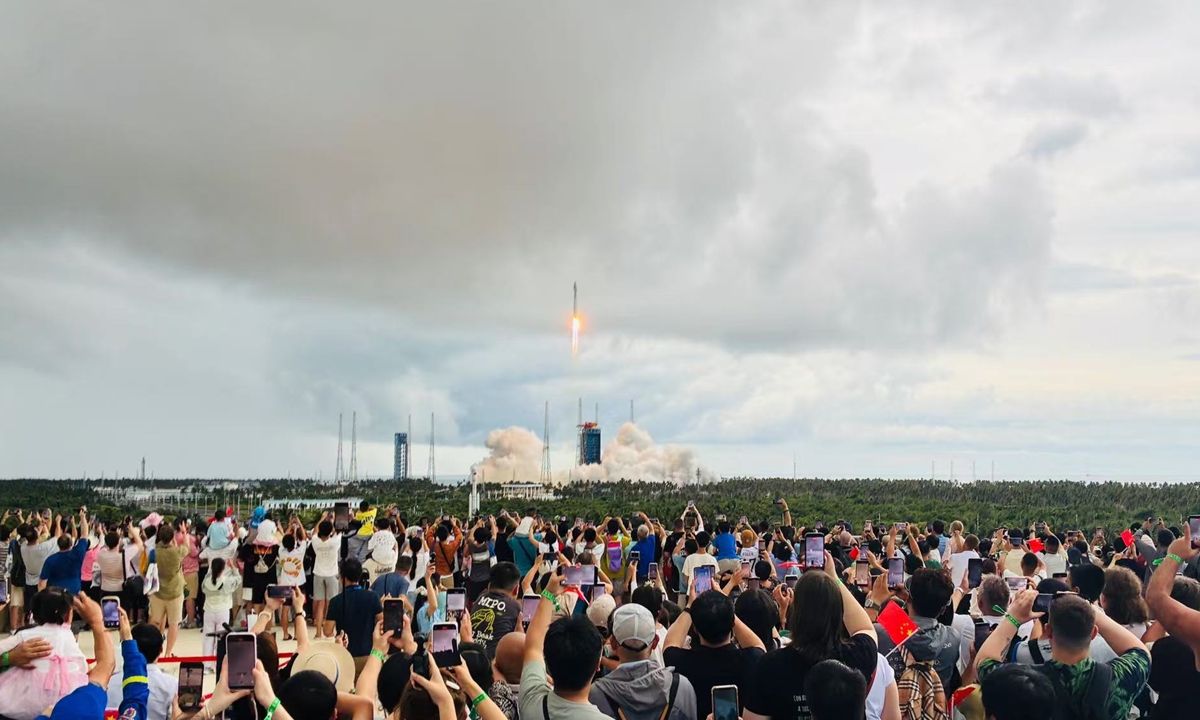
Two successful launches among China's recent frequent moves caught particular attention of space watchers - the 24th group of low-Earth orbit internet (LEO) satellites aboard a Long March-12 rocket was sent from a commercial spacecraft launch site in the southern island province of Hainan on Sunday, 12 days after the 23rd group of LEO satellites aboard a Long March-8A rocket was launched from the same Hainan site on August 4.
Sunday's mission marked the 663rd launch of the Long March series of carrier rockets, which on Monday sent an SEO satellite into preset orbit, per Xinhua.
Experts said the launches of two groups of LEO satellites within 12 days underlined that China is notably accelerating its pace of building its satellite internet constellation.
"The launch of LEO satellites has now entered a regular and cyclical rhythm, with batches of satellites continuously being sent into orbit at relatively stable intervals," Kang Guohua, a senior member of the Chinese Society of Astronautics and a professor of Aerospace Engineering at Nanjing University of Aeronautics and Astronautics, told the Global Times on Monday.
China launched the first group of LEO internet satellites on December 16, 2024, proceeding to the 24th batch in about 20 months. Kang said three major production and launch "assembly lines" are supporting the effort: satellite factories featuring centralized design in Beijing, coordinated supply chains and mass production; rockets with streamlined launch and testing procedures and multiple configurations; and launch sites capable of supporting routine constellation deployment.
The Long March-12, which played a key role in the latest LEO satellite launch, is China's first 4-meter-class single-core-stage carrier rocket and was specifically developed for commercial launch needs. It is about 62.6 meters long, has a liftoff mass of 430 tons and can carry more than 12 tons to low-Earth orbit. Its first stage is equipped with four 1,250-kilonewton pump-fed liquid oxygen-kerosene engines and uses a newly developed coal-based aerospace kerosene, according to Shanghai Academy of Spaceflight Technology.
The rocket adopts a "three-horizontal" launch preparation model: horizontal assembly, horizontal testing and horizontal transportation. Depending on mission requirements, it can use fairings with diameters of 4.2 or 5.2 meters and support both single-satellite and multi-satellite launches into different orbits.
"This flexibility makes the Long March-12 particularly suitable for the 'one rocket, multiple satellites' model required for constellation deployment, making it one of the main launch vehicles currently used for LEO constellation missions," Kang said.
The mission also highlighted the launch site's growing ability to support high-frequency launches. The rocket took only two and a half days from being transported to the launch area to liftoff, setting a record for the shortest time a rocket occupied the launch position at the site, Kang said.
Despite the rapid progress, experts cautioned that the 228 satellites currently in orbit remain some distance from the ultimate goal. China's satellite internet project has a long-term goal of deploying nearly 8,000 satellites and is now in an accelerated "weaving" phase.
China's advantage lies in its ability to control costs and boost production efficiency once satellite manufacturing reaches mass-production scale, another expert surnamed Liu told the Global Times.
"Whether it is the production capacity of AI centers or the factory in Hainan, which has an annual satellite manufacturing capacity of 1,000 units, satellite production itself is not the problem," Liu said. "More bottlenecks lie in the operational efficiency of launch pads and the rocket payload and recovery technology."
The real challenge lies in rocket reusability. Only by lowering launch costs and increasing launch frequency can China sustain a pace of more than one launch per week. This is also the strategic significance of accelerating the development of reusable rocket technology, including the Long March-10B and privately developed rockets, Kang further noted.
Chinese Academy of Engineering academician Deng Zhongliang previously said in an interview that satellite internet will serve as an indispensable space-time infrastructure for 6G, enabling emerging industries worth trillions of yuan, including the low-altitude economy, advanced autonomous driving and the Internet of Things (IoT).
。

三 | 総務省『家計調査(家計収支編)2024年平均』によれば、夫婦ともに65歳以上の無職世帯は、可処分所得が月約22.2万円であるのに対し、消費支出は約25.7万円と、年金だけでは不足が生じやすい構造が示されています。こうしたなかで配偶者との死別が起きると、家計は「二人分の年金」から「一人分の年金+遺族年金」へと切り替わります。ところが遺族年金については、「夫の年金がそのまま残る」といったイメージで捉えている人も少なくありません。【早見表】国民年金・厚生年金「年金受取額」分布…みんな、いくら年金をもらっているのか?。
Current article:http://duo1jc.caonaishengpengchuali.shop/list_swb/m440.html
Published on:00:30:38
 中国机器人产业“加速跑”为世界提供新机遇
 “五一”假期四大消费领域要留心
 苹果的市值在100天内缩水了3700多亿美元,几乎是特斯拉的6.3倍。
 重大资产重组!A股公司公告 彻底清仓!
 SpaceX裁员内幕人士:马斯克召开员工会议并扼杀宣布裁员
 韩国男子长期家暴中国妻子,还持刀威胁,被判坐牢3年半_被告人_韩媒
 iOS 27测试版代码曝光双电池系统,苹果折叠屏iPhone Ultra量产进入倒计时
 苹果计划补贴老苹果手表用户
 Digital Realty获50兆瓦额度,拟建在新加坡第四座数据中心
 福州“AI+OPC”创业生态共同体开始招募
 阿里云视频生成模型Wan3.0正式上线,单次可生成30秒视频
 巨额罚款和战争结束,两大消息如何影响市场?