
{主关键词}
- 49451福建深远海养殖再升级 全产业链目标产值500亿元
- 93826法国总统马克龙再次允许法国军队前往乌克兰
- 38887大乐透第26085期开2注一等奖
- 539692(经济观察)算力也能“存”和“买” 中国探索“算力银行”“算力超市”,(经济观察)算力也能“存”和“买” 中国探索“算力银行”“算力超市”
- 5171937再创新高 鸿蒙智行5月交付新车破4.4万辆 尊界S800大定破1600台
- 1379茅台数科与腾讯云达成合作
- 9487989岁挪威国王病情恶化住院,前不久还接见了哈兰德领衔的挪威队
- 428美官员抹黑中企开展间谍活动,中使馆:贼喊捉贼、倒打一耙,强盗逻辑;真正热衷于全球搞间谍活动的是美国,某些人会怀疑烧麦里都有窃听器
- 75062633.5亿元!中国移动再次加码华为昇腾:超1万卡AI超节点落地
- 251圣灵庇佑《全球使命3》战神-圣盾骑士大评测
- 6429063财报前3天秘访中国台北!黄仁勋仅停留2小时:搭专机离开引猜测
- 769521办公楼洗手间擦手纸推荐,维达商用升级楼宇公共空间体验
- 1058“五一”假期四大消费领域要留心
- 916上海:推进AI+广告公共服务平台、AI广告中试基地建设
- 3823803Hema Malini pens heartbreaking tribute to Dharmendra on his 90th birth anniversary
- 8629多台共舞,超强台风“沙德尔”已睁眼!中央气象台:“不是三缺一,是三带一”!浙江有暴雨,局部大暴雨
- 93734普京结束访华行程,在哈尔滨期间活动密集,信息量大
- 81694机器人“害羞式跑姿”冲刺夺冠
- 87582327家百亿私募重仓股揭晓!新进29只个股 减持7只
- 7390前上海海港主帅是如何借铁腕手段与过人智慧,帮助狼队保级的?
- 687记者:文森特有意回归热火 球队还剩1个标准名额
- 956248华为钱包更新电影票卡包功能,支持时间网络应用
- Copyright @ 2016-2017 我的网站 版权所有
第五元素
惊喜,还是惊吓?_我的网站

一 |
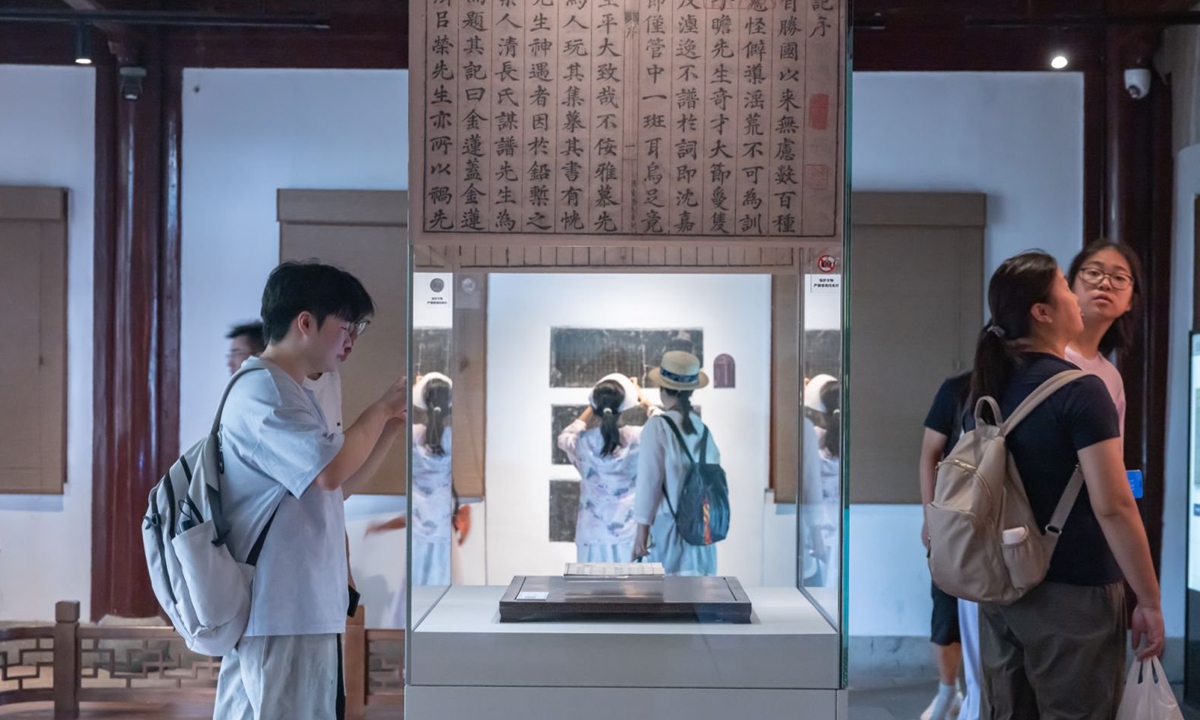
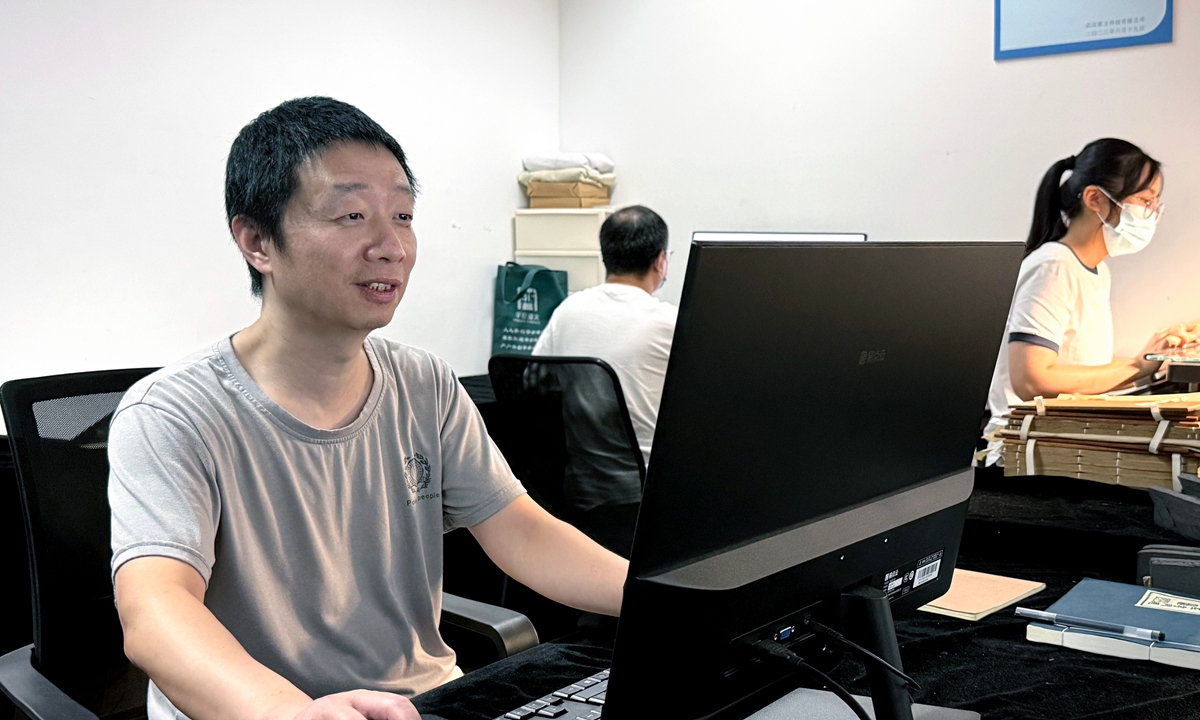
Huang Gang is in his fifties. Every day, he sits before a computer screen at Tianyige Museum (Tianyige), flipping through ancient books - digitally.
As director of the information technology department at Tianyige Museum in Ningbo, East China's Zhejiang Province, home to Asia's oldest surviving private library and one of the world's three oldest remaining family-run libraries, his job title may seem far removed from old books. Yet his work centers on them: converting brittle, thread-bound antique volumes into searchable, zoomable digital files accessible on screen.
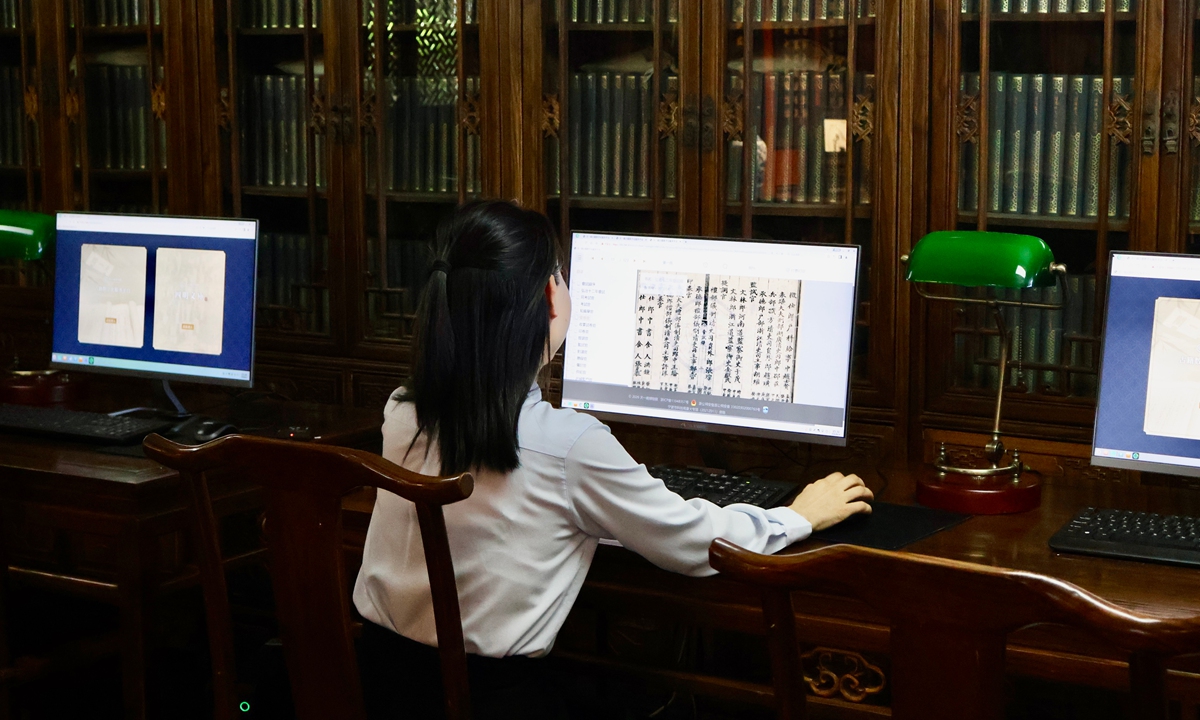
For years, Tianyige has carried out digitization in batches guided by its mission: rescue-oriented preservation, scholarly organization and public-oriented outreach. Its teams have scanned more than 3.4 million pages of ancient texts. The institution rolled out its Ancient‑Book Digital Service Platform back in 2009. By 2025, the platform had drawn over 4.6 million total visits.
To outsiders, this might look like a headlong rush into digitization. For Huang and his colleagues, it is delicate work balanced between fast‑evolving artificial intelligence models and the reverence owed to fragile paper relics. "Technology is a tool, ancient books are artifacts, and reading is the ultimate purpose," Huang told the Global Times.
Beyond tech boundaries
Deep in the storage vaults of Tianyige, tens of thousands of ancient volumes rest in silence. Some pages are curled and fragile; others bear faded script -the accumulated marks of centuries. Vulnerable to aging, wear and external damage, these precious paper relics can hardly sustain long-term repeated manual consultation, making digital preservation an indispensable way to inherit ancient book resources.
Huang's daily work involves leading his team in the digitization of the library's entire collection of ancient books, paintings and cultural relics, bringing rare treasures out of the shadows and into public view.
AI now serves as a core auxiliary tool for ancient-book digitization and research. Huang's group initially built character-recognition frameworks based on optical-character-recognition technology. By cross-checking outputs across different models, ancient Chinese characters, damaged script and blurry handwriting.
According to Zhejiang Daily, by August 2025, the Tianyige's digital platform had added over 3,700 new digitized book sets, lifting its total digital holdings past 20,000 volumes.
Digitization is never a purely technical exercise; in-depth scholarly expertise in ancient texts remains indispensable. Huang frequently collaborates with Zhao Xuteng, a museum librarian specializing in classical literature. Zhao is responsible for selecting which volumes to digitize, evaluating editions, studying content, and identifying works of significant academic or public value. While one team focuses on the technical execution, another digs deep into the textual substance, ensuring that cold digital capture remains faithful to the historical and bibliographic logic of the originals.
Staying true to reading
When he is not writing code, Huang keeps asking one fundamental question: What should technology actually do for people? "All technology ultimately serves the act of reading itself," he said. "It can never replace that."
With the rapid rise of large language models, demand for high-quality text corpora has surged. Overseas, some AI companies have reportedly purchased millions of printed books in bulk, scanned them and then shredded the originals.
"Machines can efficiently compile documents, retrieve sources and generate explanatory notes. Real engagement with ancient texts, however, is far more than mechanical assembly of characters," Huang noted.
Both Huang and Zhao stressed that human beings sit at the heart of cultural inheritance. People absorb wisdom from old texts, draw on personal experience and scholarship to reflect, and produce new knowledge - an intellectual process no AI can fully replicate.
The Global Times learned that every digitization workflow at Tianyige follows strict closed-loop protocols: collection checkout logging, noncontact scanning, AI-powered quality checks, precise image stitching and compliant online publication. The full procedure minimizes physical wear on original artifacts.
"A book is, first and foremost, a cultural relic that carries a thousand-year legacy," Huang said. "Only secondarily is it a text to be read." That principle, he added, is shared by all guardians at Tianyige.
"Media change, technologies evolve, but the essence of reading has never changed," he stressed.
Today, drawing on its comprehensive digital collections, Tianyige hosts monthly exhibitions of rare texts and organizes family reading events where parents and children explore the classics together. For Huang and his colleagues, the most gratifying reward is watching more and more ordinary people develop a love for ancient reading and a deeper appreciation for the traditional Chinese culture.
In an era swept by artificial intelligence, Tianyige's guardians tend to fragile paper relics while leveraging modern technology, preserving the genuine power of reading. More than 450 years of scholarly heritage flows onward, passing between human fingertips and glowing digital screens.
。
近日,在澳大利亚布里斯班音乐节上,一架F/A-18“超级大黄蜂”战斗机开着加力从城市中间呼啸而过。在长焦镜头的压缩下,这一画面变得尤为紧张刺激。战斗机在城市中间飞行并不少见。在一些国家的节日庆典上,主办方常常邀请空军进行低空飞行和空中展示,借此将节日气氛推向高潮。这样的表演通常在空旷的场地上空进行,而布里斯班市的这次表演显然更为大胆、刺激。当F/A-18“超级大黄蜂”战斗机庞大的机体从城市楼宇间以极高的速度低空飞过时,巨大的轰鸣声和极快的速度给观看者留下强烈的感官体验。

二 | 事实上,在空旷的水域上空或城市上空进行飞行表演,其技术难度对于现代战机来说几乎为零。

三 | F/A-18“超级大黄蜂”战斗机在楼宇间的飞行照引爆人们的眼球,展现出娴熟的飞行技巧和较强的技战术性能。实际上,该机作为一款舰载机,具备良好的低空、低速性能以及较强的机动性,如此才能在狭窄的水泥丛林中飞行自如。否则,一不小心将会是机毁人亡的不堪结局。
Current article:http://duo1jc.caonaishengpengchuali.shop/vak/6p0y.html
Published on:03:43:55
我的网站热门国内